
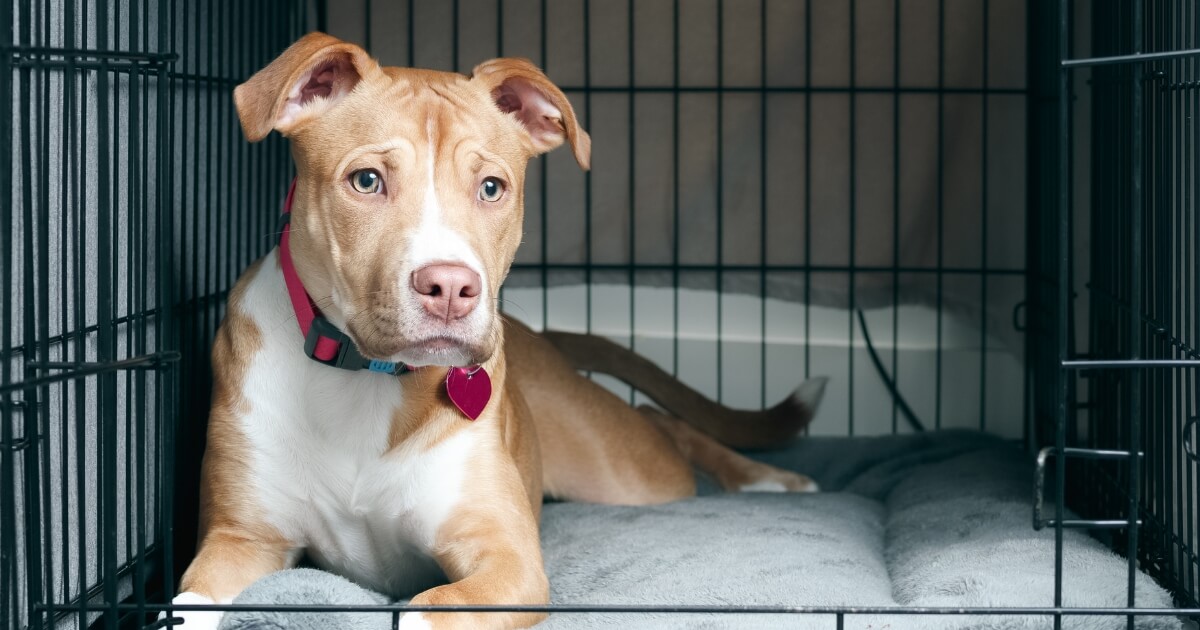
Why a crate helps your puppy (and you)
If you just brought a puppy home, you already know the feeling: you turn around for thirty seconds and there is a puddle on the rug, a chewed shoe, or a puppy halfway into the pantry. A crate is not a punishment box and it is not a place to park your dog all day. Used well, it is the one spot in your house where your puppy can’t get into trouble, can’t practice bad habits, and can actually rest.
Puppies need a lot of sleep, and an overtired puppy acts a lot like a naughty one. When your puppy has a quiet den to go to, you stop spending every waking minute supervising, and your puppy learns that settling down is normal. That calm is the foundation almost everything else in training is built on.
The goal of this routine is simple: your puppy walks into the crate on their own, lies down, and stays quiet. You get there in small steps, not in one hard night.
Step 1: Pick the right crate and put it in the right place
Size matters more than style. Your puppy should be able to stand up, turn around, and lie down stretched out. Much more room than that and your puppy can sleep at one end and go potty at the other, which works against house training. If you buy a crate sized for your dog as an adult, use a divider panel and move it back as your puppy grows.
Wire or plastic both work. A wire crate lets your puppy see you. A plastic crate feels more like a den. Some puppies settle faster when a wire crate is partly covered with a light blanket, so the back and sides are shaded but air still moves.
Put the crate where the family is. A crate in the garage or a back room feels like exile, and your puppy will tell you so. During the day, the kitchen or living room is usually best. At night, many owners keep the crate in or near the bedroom for the first weeks, so you can hear when your puppy truly needs to go out.
Keep the inside simple: a washable bed or mat and one safe chew. Skip food and water bowls sitting in the crate for now, and skip anything your puppy could shred and swallow.
Step 2: Make the crate the best place in the house
Your puppy decides how they feel about the crate in the first few days, so stack the deck.
- Feed meals in the crate. Put the bowl just inside the door at first, then farther back with each meal. Your puppy starts walking in on their own because good things happen there.
- Toss treats in when your puppy isn’t looking. Let them discover a surprise in the crate a few times a day.
- Save a special chew for crate time only. When the crate opens, the chew goes away. That chew becomes a reason to go in.
- Never use the crate as punishment. If you shove your puppy in there when you are angry, you teach them the crate means trouble.
This is the same idea we use in reward-based foundation training: you mark the behavior you want and pay it well, so your puppy wants to repeat it. Walking into the crate is a behavior, and you can teach it just like sit.
Step 3: Build up time in short, boring sessions
Most crate problems come from doing too much too soon. Build the time up in small steps.
- Door open. Toss a treat in, let your puppy go in and come out freely. Repeat a handful of times.
- Door closed for a few seconds. Give the chew, close the door, sit right next to the crate, then open it before your puppy fusses.
- Stretch it out while you are nearby. A minute, then a few minutes, then while you make dinner in the same room.
- Step out of sight briefly. Leave the room for a moment and come back calmly. No big hello.
- Practice short absences. A quick trip to the mailbox, then a short errand.
Keep your comings and goings low-key. A dramatic goodbye and an excited reunion teach your puppy that your leaving is a big event. Calm out, calm in.
Crate your puppy sometimes when you are home, too. If the crate only happens right before you leave, your puppy learns that the crate predicts being alone and starts to dread it.
Step 4: Nights, the first week, and the whining question
The first few nights are the hardest part of crate training a puppy, for both of you. A little preparation helps a lot.
- Tire your puppy out before bed with play and a short walk, then a last potty trip right before the crate.
- Pick up water a little while before bedtime so the bladder isn’t full at lights-out.
- Plan on at least one night trip outside for a young puppy. Keep it dull: out on leash, potty, praise, straight back into the crate. No play, no lights, no party.
So what do you do when your puppy whines? First, ask whether this is a real need. If your puppy has been quiet for a while and suddenly wakes up fussing, take them out to potty, quietly and on leash. If they go, great. If they don’t, back into the crate.
If your puppy just went out and is now barking or whining because they want out and want company, don’t open the door for the noise. Every time fussing opens the door, your puppy learns that fussing works, and it gets louder. Wait for a moment of quiet, even a few seconds, and let that be what earns your attention. Consistency here pays off quickly.
How crate time connects to house training and the place command
A properly sized crate is one of your best house-training tools, because most puppies will try hard not to soil where they sleep. That gives you a simple rhythm: out of the crate, straight outside to the same spot, praise when your puppy goes, then some supervised free time in the house. When you can’t watch closely, back into the crate.
The crate also sets up one of the most useful commands a family dog can learn: place, where your dog goes to a spot you point to and stays there until released. A puppy who is comfortable settling in a crate has already learned that a small defined space means calm. Later, that same skill moves to a dog bed in the kitchen or a mat by your desk.
You can see how practical that becomes in Kiko’s story. She came to us at six months with house-training struggles, jumping, and nervous peeing when she met new people. After our 2-Week Board & Train with our trainer Lauren, her owner had a command to send her to a spot and have her wait there until released, which works at dinner and during work calls.
Common mistakes, and when to get help
- Too big a crate with no divider, which gives your puppy a bathroom corner.
- Too long in the crate. A young puppy can’t hold it for a full workday. If your schedule means long stretches, plan for a midday potty break.
- Letting the crate only mean goodbye. Use it when you are home too.
- Opening the door for demand barking, which teaches louder demand barking.
- Rushing the steps. If your puppy panics, go back to the last step where they were relaxed and build from there.
- Skipping exercise and play. A crate is for rest after your puppy’s needs are met, not instead of them.
If your puppy is still panicking in the crate after a steady, patient week, or the crying seems like real distress rather than protest, get help early. That is much easier to work through with a trainer than to fix after months of practice.
Our trainers work with puppies and their families from our facility in Ruckersville, just north of Charlottesville. Our puppy training covers socialization, potty training, crate training, bite inhibition, and foundation obedience during those important early months.
For young puppies, Basic Marker Mastery is the place to start: four one-hour, reward-based sessions over four weeks, with no e-collar, and a 15-foot leash, clicker, and slip lead included. It builds the same skills this routine relies on: coming when called, sit, place, and walking on a loose leash. Our formal training programs start at five months.
Payment plans are available. Call us today to learn more about payment options.