
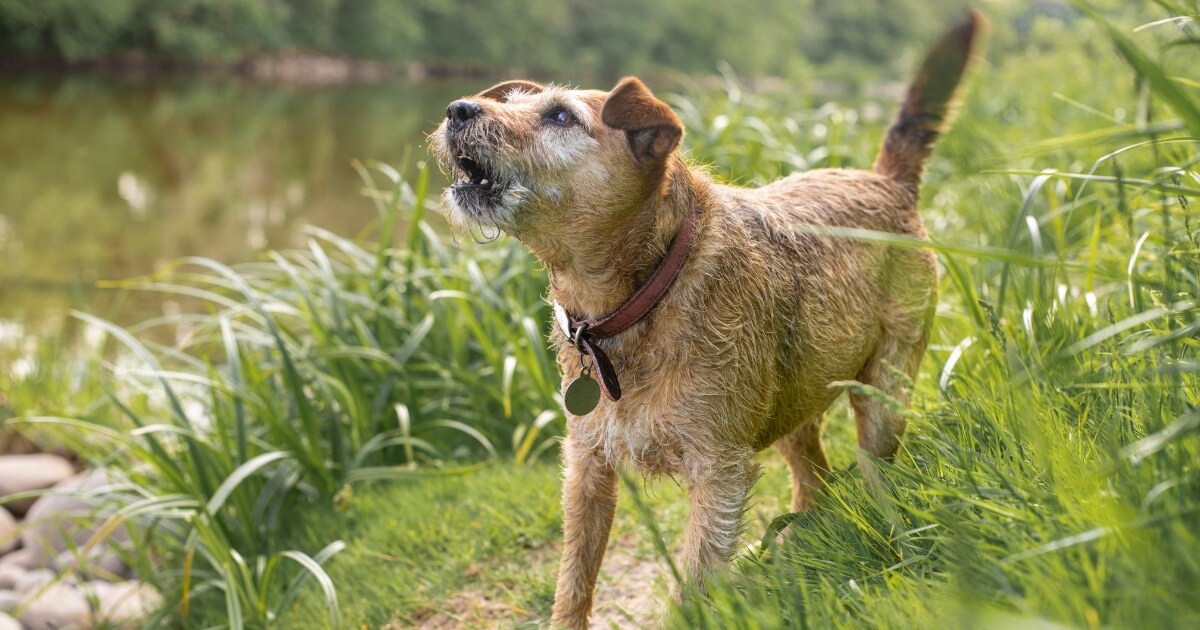
Barking is communication, and your job is to figure out what it is saying
If your dog barks at every delivery truck, every squirrel on the fence, and every time you sit down to eat, you already know how worn down it can make a household. You can’t hear the TV, the neighbors have started to notice, and yelling “quiet” has stopped doing anything at all.
Here is the good news: barking is not random. Your dog is telling you something every time, and once you know which kind of barking you are dealing with, you can stop dog barking at the source instead of chasing it around the house. Most of the dogs we see in Charlottesville and across Central Virginia fall into one or more of four patterns, and each one needs a different fix.
The four kinds of barking we see most
Alert barking. Your dog hears or sees something and sounds the alarm: the doorbell, a car in the driveway, a neighbor walking past the window. A bark or two is normal. The problem is a dog who never gets the message that you’ve heard it and have things handled.
Demand barking. Your dog barks at you: for the ball, for dinner, to get on the couch, to be let outside. This one is almost always learned. At some point barking got your dog what it wanted, so it kept working.
Boredom barking. A young, high-energy dog with nothing to do will find something to do, and barking at the yard is easy entertainment. If the barking gets worse on rainy days or after you’ve skipped a walk, pay attention to that pattern.
Anxious or reactive barking. This is the dog who barks, lunges, and can’t settle when a stranger or another dog comes near. It is driven by fear or overexcitement, not by bad manners, and it is the one that most often needs a professional. We’ll come back to it below.
Watch your dog for a few days and write down when the barking happens and what came right before it. That short list will tell you more than any general advice can.
What makes barking worse without you realizing it
Yelling back. To your dog, you shouting over the barking sounds a lot like you joining in. The noise level goes up, the excitement goes up, and the barking keeps going.
Paying off the bark. If your dog barks at you and you hand over the toy, open the door, or give a bite of your sandwich just to get some peace, you have taught your dog that barking works. Every payoff makes the next round louder and longer.
Unlimited access to the trigger. A dog who spends all day on the back of the couch staring out the front window is practicing alert barking for hours. The more your dog rehearses a habit, the stronger it gets.
No clear way to be right. Many dogs only ever hear “no” and “stop it.” They know what you don’t want, but nobody has shown them what to do instead. Clear commands give your dog a job that is incompatible with barking.
What you can start doing this week
Meet the real need first. A tired, fed, well-exercised dog barks less. Add a longer walk or a short training session to your day before you try anything else, especially for boredom and demand barking.
Teach “place.” On our pricing page you’ll see “Place” listed in our basic commands: the dog goes to a spot you point to, like a bed or a mat, and stays there until released. It is one of the most useful tools we have for barking at the door. A dog lying on its place can’t also be charging the front door. Start with short stays when nothing is happening, reward calmly, and build up to practicing it when the doorbell rings.
Mark the quiet, not just the noise. Pick a word like “yes” or use a clicker, and mark the moment your dog stops barking and is quiet, then reward. You are teaching your dog that silence is what earns the good stuff. Keep your voice calm and low. Your dog should hear the difference between you and the barking.
Manage the triggers. Block the view at the front window with a film or closed blinds, move the couch, or keep your dog out of that room while you work on training. For doorbell barking, practice with a family member ringing the bell over and over while your dog holds its place. Management is not cheating. It stops your dog from rehearsing the habit while you teach a new one.
Stop paying for demand barking. When your dog barks at you for something, wait for a few seconds of quiet, then give it. Expect the barking to get worse for a few days before it gets better. That burst means the old strategy is failing, and it is a sign you are on the right track, as long as you stay consistent.
If you have a puppy, start now. Puppies bark to get attention, to protest the crate, and at every new sound. The habits a puppy builds early are the habits you live with later, so reward quiet from day one and avoid giving in to barking in the crate. Our formal programs start at five months, but younger puppies can begin with puppy training through Basic Marker Mastery, a four-week, reward-based program that introduces come, sit, place, and loose-leash walking.
When barking is really reactivity
Some barking is not a manners problem at all. If your dog barks and lunges at other dogs on walks, can’t settle when guests come in, or goes on high alert at every noise, you are likely dealing with anxiety or reactivity. Reactive dogs overreact to certain things or situations, often out of fear, and the barking is a symptom of what the dog is feeling. Quiet games and a mat help, but they rarely solve it on their own.
Hobbes, a year-and-a-half-old hound, is a good example. His family told us they were at a breaking point: every noise, every stranger, and every dog set off barking and aggressive behavior, and basic commands went unheard. Hobbes spent two weeks with our trainer Lauren in our Board & Train program, with daily updates for his family the whole way. He came home responding to every command he’d been taught, walking through the world without reacting to it, and, in his family’s words, able to “seemingly finally relax” at home. You can read Hobbes’ full story here.
If your dog’s barking comes with lunging, growling, or a dog who can’t calm down for a long time after the trigger is gone, that is the point to bring in a trainer rather than trying to push through it alone.
How our Charlottesville trainers help with barking
Most barking problems come down to a dog who doesn’t have clear rules and an owner who doesn’t have clear tools yet. Our obedience training gives you both: commands like place, down, and off, and the know-how to use them when it counts.
You have two main ways to get there. Our in-home lessons happen in your dog’s own world, the house, the yard, and the park or route you walk every day, which is where the barking actually happens. Our 4-lesson In-Home Basic Obedience package covers come, sit, down, place, out, loose-leash walking, and off. For bigger or more stubborn problems, our 2-Week Board & Train program lets your dog train daily with a pro trainer, and then we spend time teaching you exactly how to keep the results going at home.
For dogs whose barking is part of aggression or reactivity around other dogs, we also offer a dedicated 8-lesson In-Home Aggressive Dog Training program. The first four lessons cover basic obedience, and the last four work with you and your dog around other dogs in different scenarios.
Payment plans are available. Call us today to learn more about payment options.
Every plan starts with a free consultation where we listen to what’s going on with your dog and recommend the right program. Our facility is in Ruckersville, just north of Charlottesville, and we work with families across Central Virginia. Call us at (434) 205-9905 or reach out through the website.
Tired of the barking? Book your free consultation and see our training plans and pricing. →